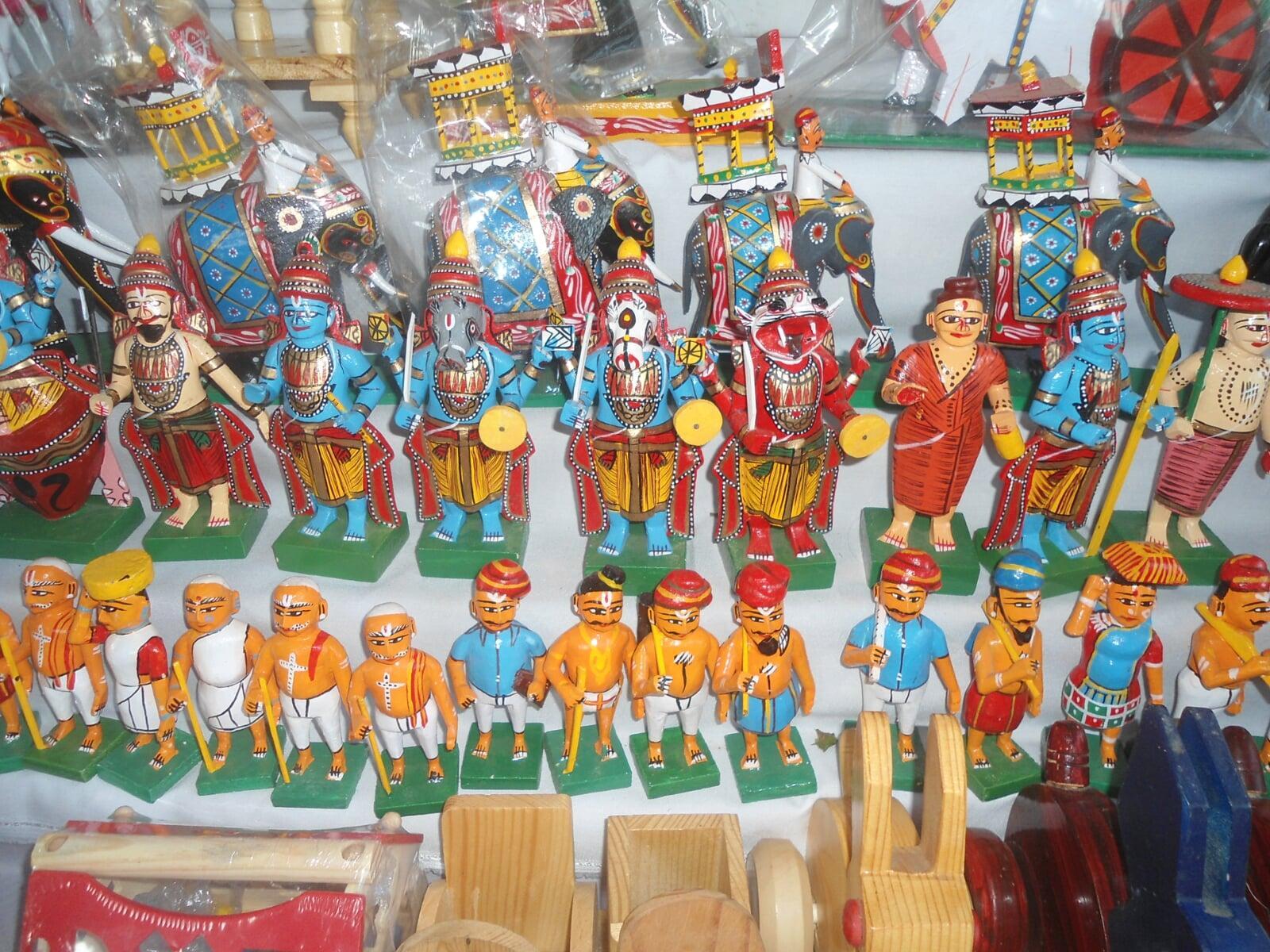
Kondapalli Toys – The Soul of Andhra’s Wooden Artistry | A Heritage Handcrafted for the World
Kondapalli Toys – The Soul of Andhra’s Wooden Artistry | A Heritage Handcrafted for the World
Introduction: The Legacy that Breathes Through Wood
Amid the rhythmic clatter of carving tools and the soft scent of freshly hewn wood, the story of Kondapalli Bommalu unfolds—a 400-year-old craft tradition that has transformed simple wood into living tales of India’s cultural heritage.
Born in the quaint village of Kondapalli, near Vijayawada in Andhra Pradesh, these wooden toys stand as a symbol of imagination, devotion, and craftsmanship.
At CraftCoup, we believe that every Kondapalli toy carries a story that must be seen, touched, and cherished. Our mission is to bring these stories to homes across the world while uplifting the artisans who have preserved this timeless art through generations
The Origin and History of Kondapalli Art
The roots of Kondapalli toy-making trace back over four centuries to the 16th century, during the reign of Anavema Reddy of the Reddy dynasty. Historical evidence and artisan testimonies reveal that Aryakshatriyas, a skilled community of craftsmen from Rajasthan, migrated to Andhra Pradesh under royal patronage. They were originally temple sculptors, carving divine icons, Garudas, and vahanas for sacred architecture.
When their temple work concluded, they began using leftover wood to create small figurines depicting gods, animals, and everyday rural life. Thus began the art of Kondapalli Bommalu—an expression of divinity, folklore, and the human spirit.
Generations later, these families continue the tradition in a place lovingly known as Bommalu Colony (Toy Colony) in Kondapalli village. Each household participates in the craft—men carving, women painting, and children learning the art from the moment they can hold a chisel or brush.
The Essence of Kondapalli: From Village to World Heritage
The word “Kondapalli” literally means “mountain village” (from Telugu konda – hill, palli – hamlet). Surrounded by hills rich with Tella Poniki trees, Kondapalli’s geography itself nurtures this craft. The artisans found in this wood not just a medium but a muse—it’s soft, light, and ideal for carving expressive forms.
Over centuries, Kondapalli toys evolved from simple playthings into collectible artworks admired by connoisseurs of Indian handicrafts worldwide. Festivals such as Sankranthi and Dasara traditionally featured these toys in Bommala Koluvu, where families displayed figurines representing gods, dancers, and village life.
For generations, these toys were not just decorative—they were educational and spiritual companions that passed down values, culture, and mythology to children. Today, they have become both heritage souvenirs and eco-friendly decor, bridging the gap between nostalgia and sustainable living.
Craftsmanship and the Artistic Process
The making of Kondapalli toys is a slow, soulful, and meticulous journey, entirely handmade and deeply rooted in eco-conscious tradition.
1. Selection of Wood
Artisans use wood from the Tella Poniki tree (botanical name Jiuotia Rotteri Fromis).
Only mature trees from nearby forests like Gangineni, Adlapadu, Chevuturu, Konduru, and Madhavaram are chosen. Instead of cutting entire trees, craftsmen trim branches, allowing regrowth—making this process sustainable and environmentally friendly.
2. Seasoning the Wood
The wood is left to dry for nearly a month under sunlight to remove moisture. This prevents cracking and ensures a smooth surface for carving. Some artisans also gently heat the wood over sawdust embers—a traditional method of natural seasoning.
3. Carving the Soul
Each toy begins as a block of wood, which artisans carve using tools like the Bahudara, Aakurai (file), and small chisels. This stage brings the figure to life—whether it’s the elegant curve of a dancer or the sturdy frame of a bullock cart.
Every artisan’s hand movement is guided by generations of skill, not mechanical measurement. As one craftsman shared, “The wood listens to our fingers; we don’t just shape it, we speak to it.”
4. Assembling the Pieces
Since toys are made part-by-part, each component—arms, legs, or ornaments—is joined using a traditional adhesive called Makku, made from tamarind seed paste mixed with sawdust. Some use Acacia gum (Temma Jiguru) or natural lime powder (Sudda) to ensure durability.
This eco-friendly glue gives the toy strength while maintaining its biodegradability—an art form where nothing goes to waste.
5. Surface Finishing
The assembled toy is coated with a fine layer of the tamarind paste mixture to cover joints and cracks. The surface is then polished with sandpaper for a silky finish. In the past, artisans used dried banana leaves or smooth horn plates to rub the surface to a natural sheen.
6. Painting the Magic
Color transforms wood into life. The artisans use natural vegetable dyes, chalk powder, and water-based colors to depict intricate details. Modern artisans may use enamel paints for brighter tones, yet many still prefer traditional eco-friendly hues.
Women artisans play a key role here—their delicate brushwork adds charm to each figure. Brushes made from goat hair allow fine strokes for eyes, jewelry, and costumes.
7. Drying and Polishing
After painting, toys are sun-dried for 24 hours. A light polish or varnish may be applied to enhance durability while retaining the natural glow of the wood.
Themes and Symbolism in Kondapalli Art
Kondapalli toys are storytellers. Their designs capture the rhythm of rural India and its mythological universe.
Mythological Themes
Scenes from Ramayana, Mahabharata, and Puranas remain popular—like Dasavataram (Ten Avatars of Lord Vishnu), Krishna Leela, and Rama Darbar.
These figures are often used in spiritual storytelling and festive displays.
Village Life & Festivities
Equally charming are depictions of daily life—farmers ploughing fields, women grinding grains, palm tree climbers, or a bullock cart loaded with harvest. Each toy reflects the essence of Telugu culture and simplicity.
Royal & Decorative Sets
Toys like Elephant Ambari (royal elephant with riders), Raja-Rani couples, and dancing dolls symbolize prosperity and celebration.
The Dancing Doll (Butta Bomma), though originally from Thanjavur, became a favorite in Kondapalli. The doll’s spring-based balance makes it gently sway—a marvel of folk engineering.
Animal Figures
From parrots to tigers and cows, animal figurines express harmony with nature, often used as educational tools for children.
The People Behind the Craft: The Aryakshatriyas
The Aryakshatriyas—the traditional artisans of Kondapalli—consider their craft a divine gift.
For centuries, this community sustained its livelihood solely through toy-making, passing knowledge from one generation to the next within families.
Each home in the Toy Colony functions like a miniature workshop—men carve, women paint, and children assist by polishing or packing.
This family-based model keeps the art alive as a collective cultural enterprise, blending artistry with community.
Yet, despite their skill and devotion, artisans face economic challenges—rising raw material costs, cheap factory-made imports, and reduced market exposure.
Organizations like CraftCoup are now stepping in to create fair trade systems and provide direct access to buyers.
At CraftCoup, our focus lies in empowering artisans with market access, digital visibility, and fair compensation. We envision a world where heritage crafts not only survive but thrive as sustainable businesses.
Sustainability and Eco-Conscious Crafting
Kondapalli toys embody the principles of sustainability and circular economy long before they became global buzzwords.
The use of Tella Poniki wood ensures renewable sourcing. The adhesives are biodegradable, and natural dyes reduce environmental pollution.
Even today, artisans prefer recycled sawdust, natural gums, and waste cotton for finishing.
Every Kondapalli toy is a zero-waste creation, handmade without electricity or industrial machinery—a beautiful example of green craftsmanship that aligns perfectly with modern eco-conscious living.
Cultural and Emotional Value
Beyond artistry, these toys are living connections to India’s storytelling heritage.
They remind us of a slower, mindful way of life where beauty was shaped by hand and heart—not machines.
Owning a Kondapalli toy is like preserving a piece of cultural memory—a reminder of the days when playthings carried meaning, spirituality, and craftsmanship.
Collectors around the world cherish them as art pieces, while parents choose them as safe, eco-friendly toys for children.
In Andhra homes, these toys still grace festive displays like Bommala Koluvu during Sankranti and Navaratri—a tradition that celebrates abundance, creativity, and devotion.
CraftCoup: Continuing the Legacy
At CraftCoup, we take pride in connecting artisans of Kondapalli directly with craft lovers across the world.
We believe heritage crafts should not fade into history—they should flourish with purpose.
Our initiatives include:
- Direct artisan partnerships, ensuring fair wages.
- Sustainable packaging and branding highlighting origin stories.
- Product storytelling that educates buyers about the meaning behind each craft.
- Global outreach through exhibitions, online platforms, and cultural collaborations.
By purchasing a Kondapalli toy from CraftCoup, customers become part of a larger story—one that preserves tradition, supports artisans, and sustains the environment.
Care and Maintenance of Kondapalli Toys
To preserve the charm and longevity of your Kondapalli collectibles:
- Keep them away from water and humidity.
- Use a dry, soft cloth for cleaning.
- Avoid prolonged exposure to direct sunlight.
- Store in glass showcases or wooden shelves to prevent dust accumulation.
- Handle delicately—each toy is fragile and handcrafted.
Following these steps ensures that your toy remains as beautiful as the day it was made.
Why Choose Kondapalli Toys from CraftCoup
- Authenticity Guaranteed – Every toy is sourced directly from Kondapalli artisans.
- Ethical Craftsmanship – We ensure fair trade and transparent pricing.
- Eco-Friendly Materials – Made with natural wood, dyes, and adhesives.
- Cultural Storytelling – Each toy carries heritage and meaning.
- Perfect for Decor & Gifting – Ideal for corporate gifts, festivals, and home art.
- Empowering Communities – Every purchase supports artisan livelihoods.
CraftCoup is not just a marketplace—it is a movement to revive India’s timeless crafts and celebrate artisans as the true custodians of heritage.
The Future of Kondapalli Craft
With growing awareness around sustainability and handmade art, Kondapalli toys are regaining global attention.
Online platforms, exhibitions, and collaborations are opening new doors.
Younger artisans are learning digital marketing, while global customers are seeking authentic handmade alternatives to factory products.
As the world turns towards ethical consumption, Kondapalli toys have the potential to become the face of India’s green craft revolution.
With brand partners like CraftCoup, this dream is turning into a movement—bridging artisans and admirers through storytelling, art, and sustainable trade.
Conclusion: A Living Legacy in Every Grain of Wood
The story of Kondapalli toys is more than a tale of craft—it’s a narrative of resilience, culture, and human connection.
From the sacred hills of Andhra to homes around the world, these toys carry the laughter of children, the devotion of artisans, and the beauty of tradition reborn.
In every Kondapalli toy carved by hand, there beats the pulse of India’s timeless artistry.
At CraftCoup, we honor this pulse by ensuring that each toy we bring to you is not just a product, but a piece of living heritage.
So, when you hold a Kondapalli toy—feel its texture, admire its color, and know this:
You’re holding centuries of history, creativity, and love, carefully preserved by artisans and brought to you with purpose by CraftCoup.