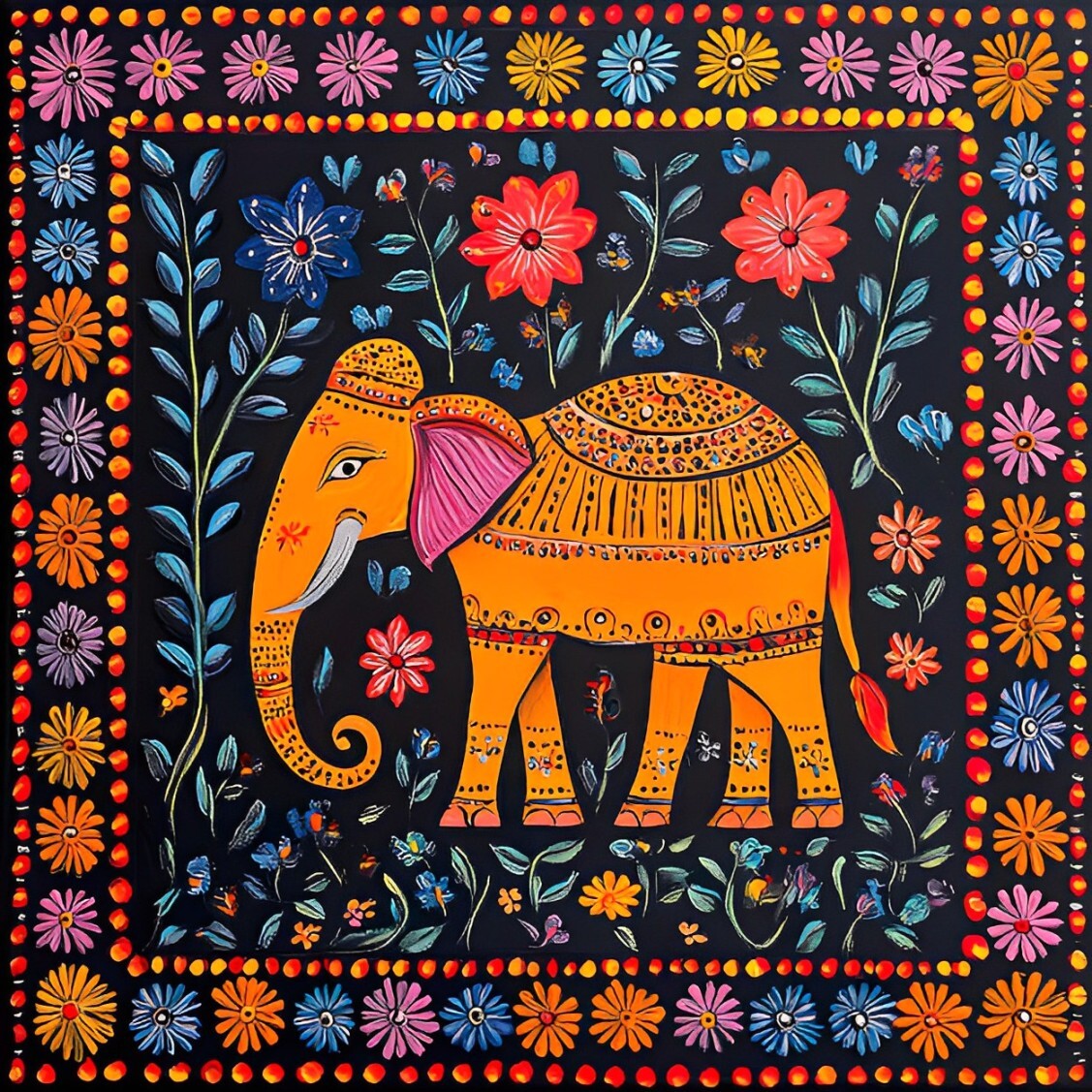
Madhubani Paintings – The Living Soul of Mithila Art
Madhubani Paintings – The Living Soul of Mithila Art
Introduction
Madhubani Painting, also known as Mithila Art, is one of India’s most cherished and recognizable folk art traditions. Practiced primarily in the Mithila region of Bihar and the bordering Terai region of Nepal, this art form blossomed as a way of expressing devotion, celebration, and cultural identity. Traditionally, the women of Mithila painted these artworks on freshly plastered mud hut walls and floors, especially during weddings, festivals, and ritual ceremonies. Over time, this art evolved to appear on cloth, handmade paper, wood, fabric, and canvas for global appreciation.
The name Madhubani derives from the meaning “Forest of Honey,” and the paintings reflect the vibrancy of nature, mythology, and daily life. The paintings are recognized for their two-dimensional style, bright natural colours, dense patterns, and symbolic motifs, often leaving no space empty as each inch is considered sacred and meaningful.
Cultural Significance and Origin
The origins of Madhubani painting trace so far back that no exact beginning can be documented. However, its association with King Janaka of Mithila and the wedding of Lord Rama and Goddess Sita in the Ramayana appears widely in both legends and oral traditions. It is believed that King Janaka commissioned artists to decorate walls and courtyards during the royal wedding celebrations.
For centuries afterward, the art continued as a domestic tradition passed from mother to daughter, surviving as an intimate visual language of womanhood, family, ritual, and faith.
Madhubani paintings were traditionally made for:
- Marriage rituals (especially the Kohbar Ghar)
- Birth ceremonies
- Religious celebrations and seasonal festivals
The Kohbar Painting, depicting symbols of fertility, prosperity, love, and divine witness, is a central theme, especially in rooms of newly married couples.
Evolution from Walls to the World
Until the 1960s, Madhubani painting remained confined within homes. During a severe drought (1966–68), the All-India Handicrafts Board encouraged women to paint on handmade paper to generate income, which led to the art gaining national and international recognition.
Since then, Madhubani paintings have grown into:
- Canvas and mural art
- Home décor products
- Textiles like sarees, dupattas, and stoles
- Fashion and lifestyle accessories
- Ceramic and wood craft items
Villages like Jitwarpur and Ranti have become globally known art centers where generations of artisans continue to carry this legacy.
World-famous artists like Sita Devi, Mahasundari Devi, Jagdamba Devi, and Baua Devi played significant roles in bringing Madhubani to global prominence.
Distinctive Styles of Madhubani Painting
Madhubani paintings have evolved into different stylistic schools, each shaped by community identity and regional interpretation.
Style | Key Features | Traditionally Practiced By |
Bharni | Bold black outlines and vibrant color filling | Brahmin community |
Kachni | Fine line work with minimal colors (often monochrome) | Kayastha community |
Godhana | Tattoo-inspired geometric human and animal patterns | Dusadh community |
Tantrik & Kohbar Traditional Style | Ritualistic, symbolic, fertility and deity-centered imagery | Various castes in ritual settings |
The main difference between Bharni and Kachni lies in their visual approach:
Bharni emphasizes color, while Kachni emphasizes linework.
Common Themes and Iconography
Madhubani paintings are rich with symbolism, where every shape, creature, and color holds meaning:
Motif | Meaning / Representation |
Sun & Moon | Divine cosmic presence and eternity |
Fish | Good luck and fertility |
Peacock | Love, beauty, and monsoon blessings |
Lotus & Bamboo | Purity, growth, and life energy |
Elephants & Tortoise | Strength, protection, and prosperity |
Shiva, Vishnu, Durga, Lakshmi, Krishna & Radha | Devotion, power, and cosmic harmony |
These motifs appear not as decoration alone but as spiritual symbols connecting the home, nature, and the divine.
Materials and Tools Used in Madhubani Painting
Traditionally, Madhubani Painting is distinguished by its use of natural and handmade colors, organic surfaces, and simple rural tools. The materials were historically sourced from the surrounding environment — reinforcing the strong relationship between Mithila’s natural landscape, spiritual practice, and artistic expression.
Traditional Materials Include:
Material | Description and Source |
Natural Colors | Prepared from rice paste, turmeric, leaves, flowers, lamp soot, and tree sap. |
Brushes & Tools | Twigs, cotton, bamboo sticks, matchsticks, and hand-made nibs rather than manufactured brushes. |
Surface | Previously wall surfaces coated with cow dung and clay; now handmade paper, canvas, and cloth are used. |
Black Outline Ink | Made by mixing soot with cow dung or gum. |
Yellow & Red Colors | Derived from turmeric, pollen, safflower, and sandalwood. |
White Color | Created from rice powder. |
Women artists traditionally relied on what they had available, and this self-reliant creative approach became central to the identity of Madhubani painting.
In modern production, while artisan communities still preserve natural pigment practices, poster colors, acrylic paints, and archival-safe inks are used for commercial artworks to enhance durability and global display.
The Craftsmanship Process: A Ritual of Devotion and Detail
The process of creating a Madhubani painting is methodical, layered, and deeply symbolic. Each step reflects both aesthetic precision and cultural meaning.
Step-by-Step Process
Step 1: Creating the Border
Every painting begins with a decorative border of geometric patterns, flora, vines, triangles, or semi-circular forms.
Borders symbolize containment of sacred space, marking the canvas as spiritually significant.
Step 2: Sketching the Central Theme
The main subject — whether Radha-Krishna, Sita-Ram Vivaah, Sun & Moon, peacocks, lotus ponds, or village daily life — is drawn at the center.
The central form represents the heart of the story.
Step 3: Filling in the Background
A distinctive feature of Madhubani art is that no space is left empty.
Artists fill areas with repeated patterns (known as Bharni or Kachni details) using fine lines, leaves, dots, or textured shapes.
Step 4: Preparing the Colors
Depending on tradition, pigments are either locally sourced plants and minerals, or high-quality fabric/acrylic paints.
Each color is symbolic — for example, red for passion and fertility, yellow for divinity, green for growth, and blue for calmness.
Step 5: Filling the Colors
Colors are applied flat and evenly without gradient shading. This creates the distinctive bold visual identity of Madhubani art.
Step 6: Final Outlining and Detailing
Fine black outlines are added last for definition and clarity.
The final artwork appears vibrant, rhythmic, and balanced — a visual storytelling tradition preserved for centuries.
Role of Women Artisans in Madhubani Art
Madhubani painting has been historically a women-led artistic tradition. It originated in the domestic spaces of rural households, where women decorated walls for marriage rituals, fertility blessings, harvest celebrations, and worship practices.
Women as Preservers of Knowledge
The art was not taught through written instruction, but through observation, repetition, and daily cultural participation — passed from mother to daughter.
Even today, the majority of Madhubani painters in village clusters such as Jitwarpur, Ranti, and Madhubani town are women, many of whom gain independent financial identity and social respect through this craft.
Art as Cultural Identity & Empowerment
- It strengthens economic independence in rural households.
- It preserves rituals and storytelling traditions.
- It creates intergenerational continuity, keeping heritage alive.
During the 1960s drought, when the region faced unemployment, Madhubani art became a livelihood lifeline, transforming what was once private, domestic decoration into a global artistic language.
Today, Madhubani is not only a cultural art form—it is a symbol of rural women’s empowerment and sustainable craft heritage.
Madhubani in the Modern Era: Evolution Without Losing Identity
While the mediums have evolved, the spirit of Madhubani remains tied to community, environment, and spirituality.
Contemporary Changes Include:
- Transition from walls to paper, canvas, bamboo, silk, and cotton
- Use of eco-friendly and premium archival colors
- Collaborations with design houses, museums, and fashion labels
- Adaptations in home décor, clothing, accessories, and lifestyle décor
Yet, the visual grammar remains consistent:
- Flat color layout
- Ornamental borders
- Symbolic motifs
- Narrative storytelling
This balance of evolution and authenticity is why Madhubani continues to thrive in both global art spaces and everyday Indian homes.
CraftCoup’s Madhubani Collection — Where Heritage Meets Elegance
At CraftCoup, we believe that art is not merely an object of decoration, but a bridge between culture and contemporary living. Our exclusive Madhubani Collection is curated directly from artisan households in Ranti, Jitwarpur, Madhubani town, and surrounding Mithila villages, ensuring that every piece retains the authenticity, dignity, and emotional depth of its lineage.
Each artwork in our collection carries:
- The signature of the artisan who painted it
- A traceable origin history tied to the Mithila region
- Traditional patterns refined for modern aesthetic settings
- The cultural blessings of prosperity, purity, peace, and joy
This collection celebrates Madhubani not as a relic of the past, but as a living art form, evolving gracefully into contemporary homes while honoring its roots.
Types of Madhubani Products Offered at CraftCoup
1. Original Hand-Painted Wall Art
Our framed and unframed artworks on handmade and archival papers highlight:
- Mythological themes: Sita-Ram Vivaah, Radha-Krishna Raas, Ardhanarishvara
- Nature themes: Lotus ponds, Fish fertility patterns, Peacock motifs
- Abstract cultural narratives and ceremonial symbolism
These wall arts are ideal for:
- Entrances and living halls
- Meditation & wellness spaces
- Office reception areas
- Heritage-inspired interior décor
2. Handcrafted Home Décor
We offer Madhubani design elements on:
- Wooden trays
- Coaster sets
- Lampshades
- Wall-hangings and nameplates
These pieces bring warmth, culture, and visual depth to interiors.
3. Madhubani Textiles
Artfully painted or printed for wearable elegance:
- Sarees (Tussar, Mulberry Silk, Cotton)
- Dupattas & Stoles
- Bags, Clutches, Wallets & Accessories
Here, tradition meets fashion — a celebration of identity through style.
Aesthetic & Artistic Benefits of Madhubani in Modern Spaces
Bringing Madhubani art into modern homes or workplaces is more than décor — it is cultural storytelling with purpose.
1. Enhances Interior Sophistication
The intricate linework and iconic motifs create a refined artistic atmosphere, adding depth and elegance to any space.
2. Connects Your Space to Nature
Fish, lotus, peacocks, trees, and celestial symbols evoke tranquility and harmony, enhancing emotional wellness.
3. Creates a Cultural Identity
Displaying Madhubani art reflects appreciation for:
- Heritage
- Craft preservation
- Cultural education and consciousness
4. Ideal for Auspicious & Spiritual Ambience
Madhubani motifs like Sun, Shiva-Parvati, Sita-Ram Vivaah carry blessings of peace, fertility, joy, and abundance.
5. Meaningful Gifting Value
It makes a timeless gift for weddings, housewarming, festivals, corporates, and cultural celebrations.
Styling Inspirations: How to Use Madhubani Art in Your Home
Space | Recommended Artwork | Visual Impact |
Living Room | Large framed Bharni-style divine composition | Creates a cultural focal point |
Bedroom | Kohbar-inspired symbolic art | Enhances warmth and harmony |
Study / Office | Kachni monochrome narrative | Adds calm, precision & mindfulness |
Dining Area | Nature and fish motifs | Promotes prosperity and abundance |
Entryway | Sun/Energy temple motif | Welcomes guests with positive aura |
Care Instructions & Maintenance
To preserve your Madhubani artwork for decades:
- Avoid direct sunlight to maintain color vibrancy.
- Keep away from moisture; use dry soft cloth for cleaning.
- Frame under protective glass for wall art.
- For fabrics, dry-clean only to protect paint detailing.
- Store rolled artworks in acid-free paper if not displayed.
Proper care ensures that your piece remains a living heirloom.
Styling Inspirations: How to Use Madhubani Art in Your Home
Why Choose CraftCoup for Authentic Madhubani Art
1. Direct Artisan Partnerships
We work closely with artisan families, ensuring fair compensation, dignity, and preservation of artistic identity.
2. Guaranteed Authenticity
Every CraftCoup product is handmade, not mass-produced.
Each piece comes from verified Madhubani artist clusters.
3. Cultural Preservation Support
Your purchase contributes to:
- Sustaining a millennia-old art tradition
- Supporting rural women artisans
- Keeping indigenous natural color techniques alive
4. Premium Craftsmanship Assurance
We select only museum-grade workmanship, ensuring:
- Crisp line detailing
- High-quality natural or eco-safe pigments
- Durable surfaces and finishing
5. Ethical, Sustainable, Heritage-Driven Brand
CraftCoup is built on the philosophy of craft respect > commercial exploitation.
When you shop from CraftCoup, you are not just buying décor —
You are investing in living cultural heritage.