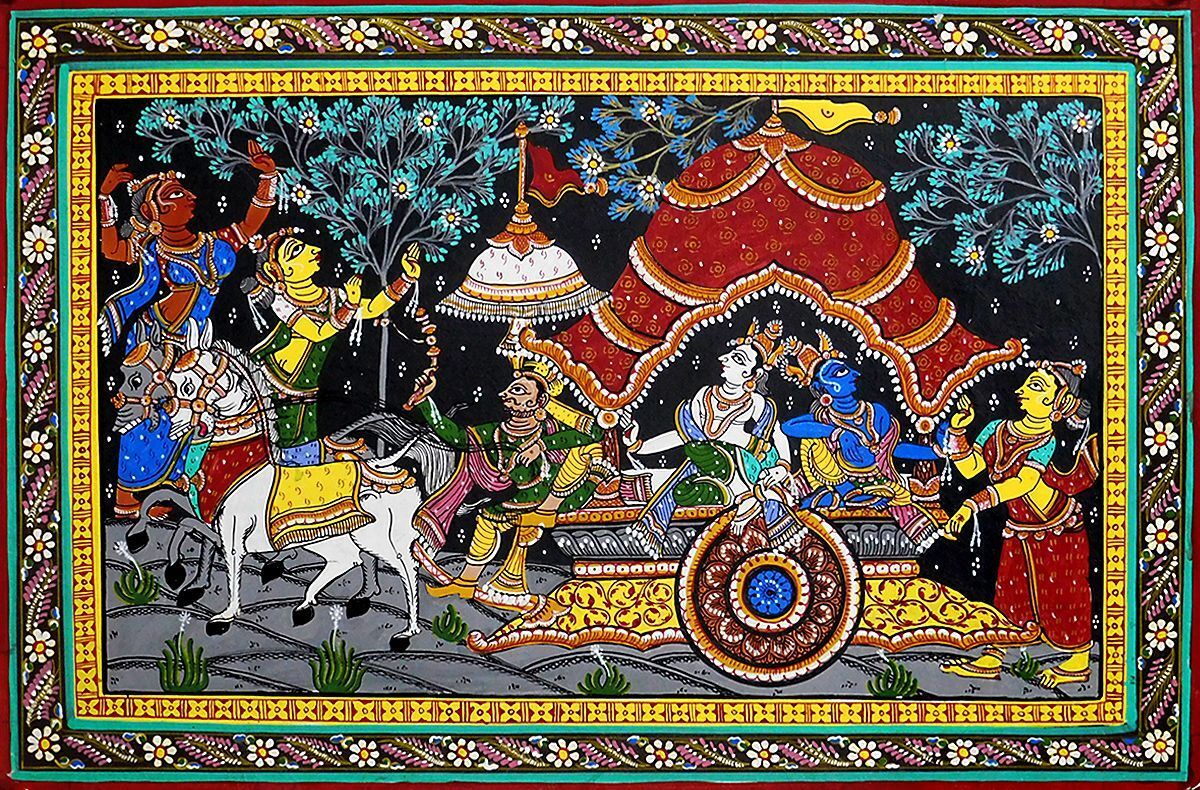
Pattachitra – The Eternal Canvas of Odisha’s Heritage | Hand-Painted Wall Art & Palm Leaf Engravings
Pattachitra – The Eternal Canvas of Odisha’s Heritage | Hand-Painted Wall Art & Palm Leaf Engravings
Introduction
Art is not only a form of creativity; it is a reflection of history, belief, emotion, and identity. Among India’s countless artistic treasures, Pattachitra stands out as one of the most cherished, culturally rooted, and spiritually inspired art forms. Originating from Raghurajpur, a heritage craft village near Puri in Odisha, Pattachitra has been practiced for centuries and continues to flourish as a living artistic tradition. The term “Pattachitra” comes from two Sanskrit words — Patta, meaning cloth, and Chitra, meaning painting — together referring to an elaborate, hand-painted artwork executed on a specially prepared cloth or palm leaf.Pattachitra is celebrated for its bold outlines, vivid natural colours, and intricate ornamentation, often illustrating mythological narratives connected with Lord Jagannath, Lord Krishna, Radha, Rama, Sita, and stories from the Ramayana and Mahabharata. The art form is more than just decorative; it carries deep cultural and spiritual significance rooted in temple rituals and traditional community life.
At CraftCoup, we present authentic hand-made Pattachitra wall art and palm leaf engravings, sourced directly from traditional artisans of Odisha. Each piece reflects patience, devotion, and a heritage preserved through generations.
About Pattachitra – History & Cultural Significance
Pattachitra has a recorded tradition of more than 300 years, though its origins are believed to be much older. It is closely associated with the Jagannath temple of Puri, one of the four sacred pilgrimage destinations (Char Dham) in India. The artists who create these paintings are traditionally known as Chitrakars — families who have inherited the craft lineage from one generation to the next.
Historically, Pattachitra paintings were first made as substitutes for deities on occasions when temple idols were temporarily removed for rituals and restoration ceremonies. Devotees carried these paintings in processions and worshipped them just like the living deities. This is why the art form carries a sacred dimension beyond its visual beauty.
Over time, Pattachitra evolved into a versatile artistic tradition expressed through:
- Patta Chitra: Cloth-based paintings
- Bhitti Chitra: Mural-style wall paintings
- Tala Pattachitra (Palm Leaf Engravings): The most intricate form of line carving art
Product Descriptions
A. Pattachitra Wall Art on Cloth / Tussar Silk
CraftCoup offers hand-painted Pattachitra wall art created on either cotton canvas or Tussar silk. The canvas is prepared using a traditional process where two layers of cloth are treated with tamarind seed gum and chalk paste to create a smooth, durable, and stone-polished surface.
The paintings typically depict:
- Dashavatara (Ten incarnations of Lord Vishnu)
- Krishna Leela (Childhood and youthful stories of Krishna)
- Rasa Lila dance with Radha and the Gopis
- Jagannath, Balabhadra & Subhadra idol panels
- Stories from the Ramayana and Mahabharata
- Elephant, peacock, lotus, and floral motifs
These artworks are perfect for home décor, pooja rooms, cultural gifting, and interior spaces that seek a touch of authenticity and elegance.
B. Pattachitra Palm Leaf Artwork (Talapatra Chitra)
Palm leaf Pattachitra, also known as Tala Pattachitra or Chitra Pothi, is an ancient engraving tradition. Artisans carefully select dried palm leaves, cut them into uniform strips, polish them, string them together, and then etch fine designs using a stylus. The grooves are filled with natural carbon or lamp-black powder to bring out the intricate imagery.
Palm leaf artworks often depict:
- Celestial and cosmic scenes
- Erotic, poetic, and romantic expressions
- Scriptural verses and mantra portraits
- Mythological stories in continuous panel format
- Decorative borders and Mandala compositions
These artworks are collectible pieces, suitable for framing, preserving, and gifting — carrying the charm of ancient Indian manuscripts.
Themes and Symbolism
Theme | Meaning |
Krishna Leela | Represents divine love, joy, and harmony. |
Lord Jagannath Trio | Symbolizes unity, community worship, and spiritual inclusion. |
Dashavatara | Expresses cosmic balance and divine renewal. |
Rasa Mandala | Represents the eternal dance of devotion. |
Lotus, Peacocks & Vines | Signify purity, beauty, and prosperity. |
Pattachitra is deeply rooted in ritual, devotion, and storytelling, making each artwork meaningful and soulful.
Benefits of Owning Pattachitra Art
- Handmade Heritage: Supports historic craft communities.
- Eco-Friendly Materials: Natural pigments and hand-prepared canvas.
- Cultural Identity: Brings spiritual and aesthetic value to your space.
- Timeless Longevity: Crafted to last beyond generations.
- Exclusive Art: No two pieces are ever identical.
Craftsmanship Process (Step-by-Step)
For Cloth/Tussar Wall Art
- Preparing the canvas with tamarind gum and chalk coating
- Polishing with stones to achieve smoothness
- Sketching outlines using fine strokes
- Filling colors (starting with white, then other pigments)
- Adding ornamentation and border motifs
- Finishing with natural lacquer for shine and protection
For Palm Leaf Engravings
- Collecting, drying, and cutting palm leaves
- Polishing and binding leaves in scroll or panel form
- Etching designs using metal stylus
- Rubbing with lamp-black to highlight carvings
- Cleaning and finishing for clarity and preservation
Each piece may require days or even weeks of labor.
Care & Maintenance
- Keep away from direct sunlight and moisture
- Clean using a soft, dry cloth
- Frame with glass for added protection
- Store palm leaf art in a dry, cool place
Why Choose CraftCoup
- We work directly with National & State Awarded artisans
- Fair-trade pricing ensuring dignity and livelihood support
- 100% authenticity guarantee — no machine prints
- Eco-conscious and heritage-preserving craft values
CraftCoup bridges craftsmanship, culture, value, and trust.